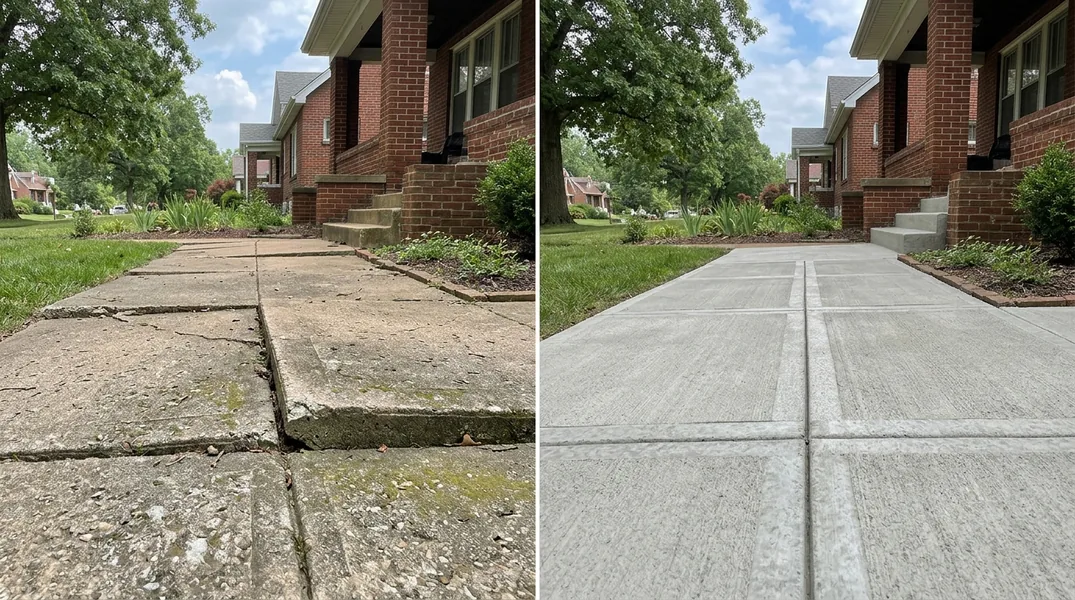
The Perfect Storm: Why St. Louis Concrete Fails Faster
If you own a home in St. Louis, you've probably noticed that your concrete doesn't age like it does in other parts of the country. Driveways crack, patios spall, and walkways deteriorate faster than they should. This isn't just bad luck or poor installation. The reality is that St. Louis has a climate and soil composition that creates a perfect storm of damage for concrete surfaces.
The problem isn't one factor alone. It's the combination of three major culprits working together: freeze-thaw cycles, road salt applications, and the region's heavy clay soil. When these three forces act on concrete year after year, they accelerate deterioration far beyond what the material can typically withstand. Understanding why this happens is the first step toward protecting your investment and knowing when you need Concrete Repair & Resurfacing services.
Freeze-Thaw Concrete Cracking in Missouri: The Cycle of Damage
Missouri winters are unpredictable. One day the temperature hovers near freezing, and the next it plummets below zero. This constant fluctuation creates what experts call freeze-thaw cycling, and it's devastating to concrete. Here's how it works: when water penetrates the surface of your concrete and then freezes, it expands. Concrete is strong, but it can't accommodate this expansion without stress. When the ice melts, the water retreats, leaving microscopic voids behind. Repeat this cycle dozens of times each winter, and those tiny voids eventually connect and grow into visible cracks.
The worst part is that this damage is cumulative. A small crack that appears after your first winter becomes a larger crack after the second winter. By year five or ten, you may have significant structural issues that require professional attention. In St. Louis, homeowners typically experience 20 to 40 freeze-thaw cycles per winter season, which ranks among the most damaging ranges in North America. This is why Concrete Driveways in this region often show signs of distress within just a few years if they weren't properly sealed or designed with freeze-thaw protection in mind.
Salt Scaling and St. Louis Concrete Damage: The Winter De-Icer Problem
Every winter, St. Louis residents and road crews apply rock salt and chemical de-icers to driveways, walkways, and streets to improve traction and melt ice. While these products are effective at their job, they're extremely harmful to concrete. Road salt doesn't just sit on the surface. It dissolves into moisture, penetrates the concrete, and attacks the cement paste that binds the aggregate together. This process is called salt scaling, and it causes the top layer of concrete to spall, peel, and crumble away.
Salt scaling is particularly aggressive because it works in conjunction with freeze-thaw damage. The salt lowers the freezing point of water, which means more freeze-thaw cycles occur at higher temperatures. Additionally, as salt accumulates in the pores of the concrete, it creates pressure that forces the surface to break apart. Over time, this creates a rough, deteriorated surface that looks weathered and compromised. Many homeowners in Kirkwood and surrounding areas notice that their driveways develop a chalky, pitted appearance within three to five years of exposure to winter salt applications. Protecting your concrete with a quality sealer and limiting salt exposure is critical for extending the life of your surfaces.
Clay Soil and Concrete Failure: The Underground Culprit
Most people focus on what happens to concrete from above, but the real problem often starts below. St. Louis sits in a region with heavy clay soil, and clay behaves very differently than sandy or loamy soil. Clay expands when it's wet and shrinks when it dries. This constant movement puts pressure on concrete foundations, driveways, and patios from underneath. As the clay shifts, it creates uneven settling, which causes concrete to crack, settle unevenly, or heave upward in certain spots.
The clay issue is compounded by the region's rainfall patterns. St. Louis receives approximately 40 to 45 inches of rain annually, which keeps the clay consistently moist during spring and fall. This prolonged moisture exposure maximizes the expansion and contraction cycles. When combined with freeze-thaw damage and salt scaling, clay soil becomes the third and often most underestimated factor in concrete deterioration. A driveway that's properly installed might still fail prematurely if the underlying soil isn't properly prepared and the concrete isn't designed to handle the movement. This is why professional installation and site assessment are so important for new Concrete Patios and driveways in the St. Louis area.
Signs of Damage: What to Look for in Your St. Louis Concrete
Knowing the causes of concrete damage is only half the battle. You also need to recognize the warning signs so you can address problems before they become expensive. The most obvious sign is visible cracking, but not all cracks are created equal. Hairline cracks that are less than 1/8 inch wide are often cosmetic, but wider cracks that continue to grow indicate structural stress. You should also watch for spalling, which appears as small chips or pits on the surface, often arranged in a pattern. Spalling is a classic sign of salt scaling and freeze-thaw damage.
Another warning sign is uneven settling. If your driveway has areas that are higher or lower than others, or if you notice a lip where two sections meet, this indicates that the concrete is moving due to soil pressure from below. Efflorescence, a white chalky powder on the surface, shows that water is moving through the concrete and depositing minerals. Finally, if you see water pooling on your concrete after rain, this means the surface has lost its slope or developed depressions, which accelerates deterioration. If you notice any of these signs on your property, it's time to contact a professional. St. Louis Concrete can assess your situation and recommend whether you need Concrete Repair & Resurfacing or if a new installation is the better choice.
Protecting Your Concrete: Prevention and Solutions for St. Louis Homeowners
The good news is that you don't have to accept premature concrete failure. Several strategies can extend the life of your concrete in St. Louis's harsh environment. The most important is sealing. A quality concrete sealer creates a barrier that prevents water and salt from penetrating the surface. Sealing should be done every two to three years, especially in St. Louis where salt and moisture exposure is constant. Additionally, proper drainage is critical. Make sure water flows away from your concrete surfaces and doesn't pool or pond. If you have clay soil issues, consider having a professional assess whether your concrete was installed with proper base preparation and compaction.
For new installations, choosing the right concrete mix design is essential. Air-entrained concrete, which contains tiny air bubbles designed to accommodate freeze-thaw expansion, performs significantly better in St. Louis than standard concrete. When you're planning a new driveway or patio project, discuss these options with your contractor. If you already have damaged concrete, don't wait for the problem to worsen. Small cracks can be sealed before they become large structural issues. Contact St. Louis Concrete at (314) 916-1279 to schedule a free estimate and learn about your options for repair or replacement. The cost of preventive maintenance today is far less than the cost of major repairs or replacement later.
Looking for a professional concrete contractor in St. Louis? St. Louis Concrete responds fast for all your concrete needs.
Get a Free QuoteOur services: Concrete Driveways · Concrete Patios · Stamped & Decorative Concrete